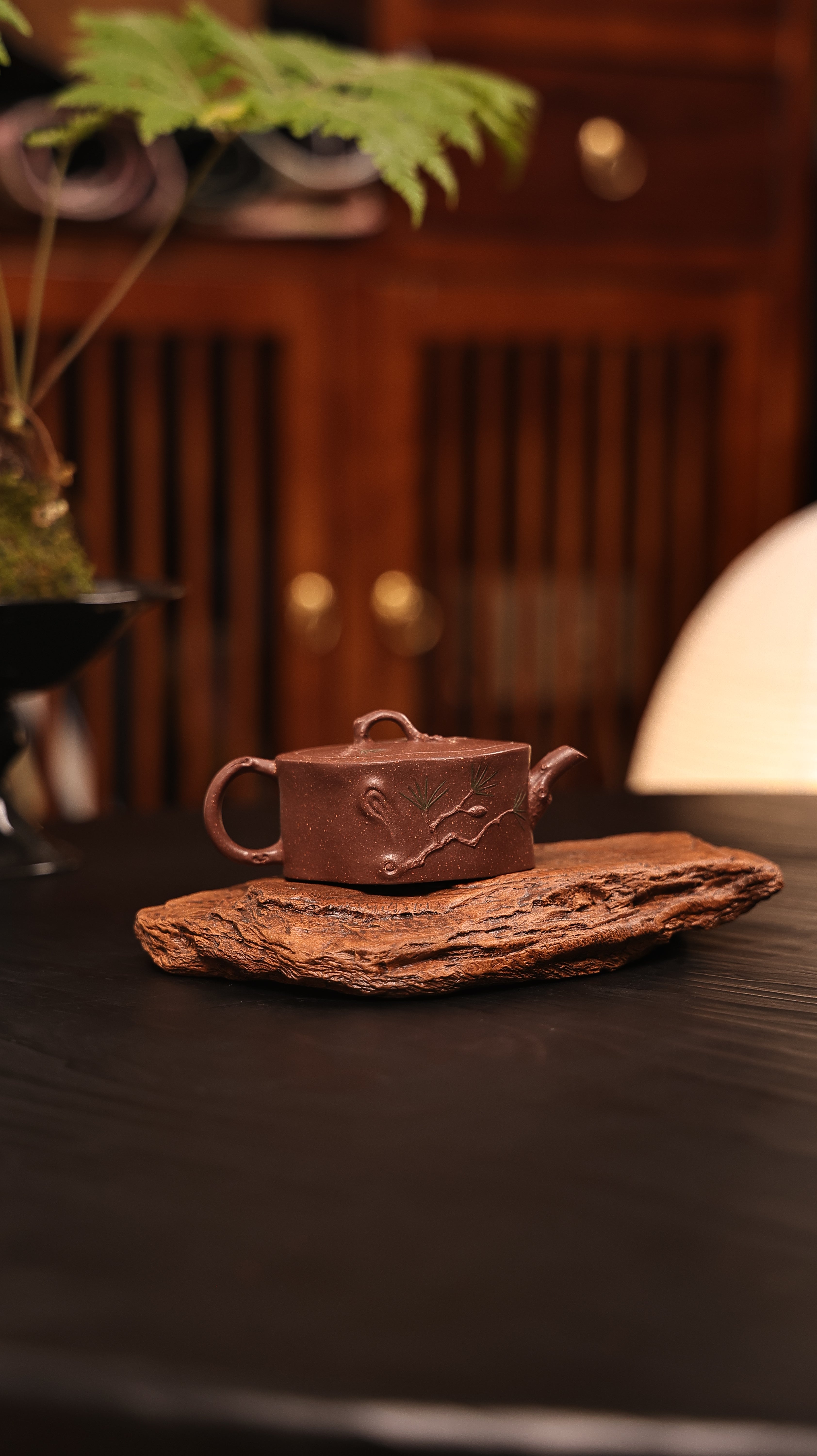
Centuries of fans have long yearned the exceptional enchantment of Yixing Zisha pots. Emerging in the modest town of Yixing, the homeland, these pots are made from a peculiar and sourced purple clay famous for its superior thermal characteristics and potency to amplify the note of potions. Other than their valuable value, Zisha teapots symbolize a profound cultural heritage, rendering them highly treasured and a bona fide masterwork for any committed teapot appreciator.
Investigating Yixing Vessels
Yixing teapots embody a noteworthy blend of history and artisan craftsmanship. Developing in Yixing, Jiangsu Locale of China, their narrative originates in the Ming Dynasty, although signs suggest earlier expressions. The distinctive purplish clay, called Zisha, found uniquely in the Yixing region, is the essential component, contributing to the pots' excellent heat sustaining and the manner they enhance the profile of tea. Periods of potters have perfected techniques—often relayed through families—including molding the clay, applying elaborate embellishments, and firing the pots at precise temperatures.- Back then, Yixing teapots were often embellished with simple designs.
- Subsequently, more ornate carvings and expressive motifs became widespread.
- The heat treatment itself is a key element, requiring lengthy phases of practice.
Collecting Zisha Teapots: Necessary Points
Setting out on a venture to collect Zisha containers can be fulfilling, but it’s fundamental to grasp what to consider. Authenticity is critical; focus on the potter’s natural tinge, a gentle reddish-brown is traditional. Examine the grain; genuine Zisha has a remarkable tactile sensation, often explained as slightly grainy. The form should be symmetrical and consistent with established styles, while seals, if present, require close examination for accuracy. Don’t hesitate to consult with skilled consultants or trusted experiences – their awareness is precious.
Ancient Pots: Delving into the Culture of famous Zisha
Years have seen Yixing Yixing Clay teapots preserve a unique role in Chinese heritage. These artfully designed pots, sourced only from the province of Yixing, are famous for their unique tone, grain, and their ability to enrich the profile of tea. Several collectors value antique Yixing teapots, treasuring them considerably not only for their aesthetic elegance, but also for the legacy they portray.
Yixing Zisha Teapots: Exceptional Choice Sorts and Their Details
Purple Clay teapots, produced in the regional locale of Yixing, the Chinese territory, are noted for their singular clay and superb brewing functions. Amongst the many Zisha types, certain varieties that are highly treasured include Qingtian. Binzhou, known for its strong purple shade and silky texture, delivers a mild flavor. The Duan Ni type, recognizable by its brownish color and mildly grainy feel, is considered to enhance tea’s weight. Lastly, The Zhuni type boasts an rare burgundy tone and can bestow a gentle nuance. Each form provides a distinct experience, facilitating them notably desirable within drink enthusiasts.
Brewing Perfection Specific Pottery Pitcher
To experience the full potential of your Yixing urn, learning the correct technique is essential. These clay pitchers, celebrated for their filtering ability, will progressively absorb the soul of the tea you prepare within them. Begin by rinsing the pitcher thoroughly with clean water. Then, use only high-quality fresh leaf tea, as lower quality options can degrade the clay’s delicate qualities. Always permit the leaves to expand completely, and remember that with each preparation, your Yixing vessel will become perpetually distinct.
Maintaining Your Exceptional Zisha Heirloom
Proper management for your Zisha pot is essential Chinese Teapot to safeguarding its character and esteem. Zisha clay, known for its unique tinge and feel, requires precise handling. Never use strong formulas, as these can affect the film. After every infusion, rinse the pitcher with lukewarm water and allow it to evacuate moisture completely.
- Refrain from soaking the container for extended periods.
- Intermittently use a soft cloth to buff the exterior.
- Weigh applying a thin layer of food-grade oil inside the pitcher after drying, which can prevent staining.
Introduction to Yixing Containers
Yixing kettles, originating from the Yixing area in Jiangsu Province, the Chinese territory, are celebrated for their distinctive qualities. Produced from the unique purple element known as Zisha, these urns are prized by drink enthusiasts worldwide. This handbook will neatly explain the fundamentals – covering classes of Zisha ground, prevailing shapes, and important care recommendations. Understanding the foundation of Yixing jars can strengthen your appreciation for this acclaimed example of Chinese artistry.
Expertise of Oriental Pots: Focusing on Zisha sourced from the Yixing district
Zisha substance from this city of Yixing represents the maximal point of Oriental jar design, boasting a special amalgamation of raw beauty and valuable artistry. These extraordinary pieces are renowned for their deep hues, often covering robust purples and chestnut hues to pale greys and faint beiges. The noted mineral composition of the exclusive-to-the-area Zisha substrate imparts a noteworthy texture and renders a gratifying aroma that richens the comprehensive drink experience, resulting in them strongly valued collectibles and necessary components of any serious ceremony.